Post by: admin
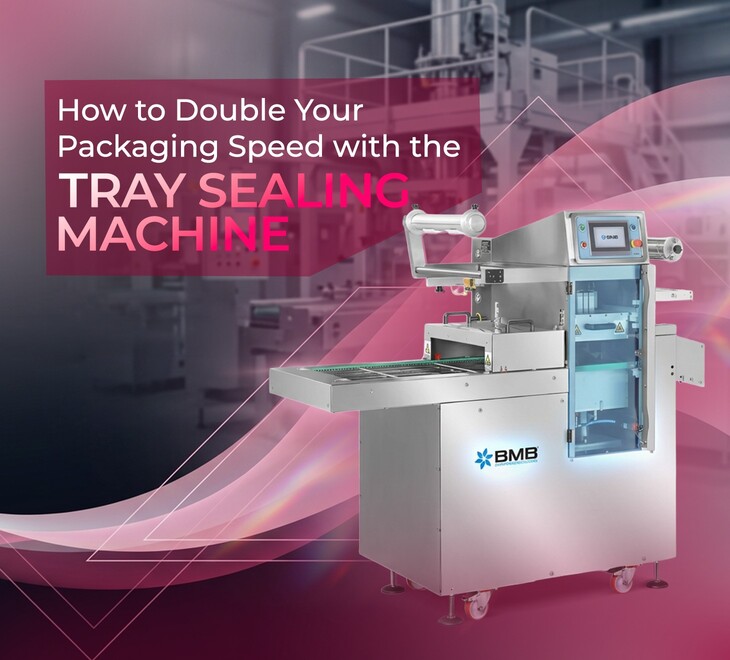
Industrial facilities that switch from manual sealing to an automatic tray sealer routinely report 2x to 3x throughput gains, without adding a single extra operator. This is not a marketing language; it's the direct result of replacing an inconsistent, labour-dependent process with a controlled, repeatable one.
When a packaging line isn't meeting production goals, it's not usually a lack-of-effort problem. A slow sealing in most industrial facilities is a structural issue. This will impact one who loses thousands of dollars in production, labour hours, and rejected product every week. The solution for this problem is simple: you need a right-hand that seals. Here's exactly how a tray sealing machine works to achieve those results on your own production line.
Manual sealing might seem manageable when volumes are low. However, the cracks come along very fast as production increases. Operators get tired, seals become inconsistent, and rejects accumulate. Every failed seal means stopping the line, reworking the product, and wasting both time and materials. This is not a training problem; it's a process limitation. The manual operator can actually seal 3-5 trays per minute. A modern automatic tray sealer will operate at 8 to 25 cycles per minute, at all times, without fatigue.
A tray sealing machine, also called a tray sealing equipment or a heat sealing machine. It seals a tray of food with a film lid by controlling heat, pressure, and timing. All the seals are the same size. All cycles have equal speed. The first and last trays of the shift have no variation.
Modern machines store settings for each product type, and switching formats only takes minutes rather than hours. They also interface directly with filling and labelling machines, provided that your line is running smoothly and without any manual transfers between stations.
The speed is not just about the sealing time. It's also about the frequency of stops. Waste due to rejected or spoiled product is one of the highest hidden costs in food and pharmaceutical packaging.
A vacuum tray sealer will evacuate the oxygen from the product prior to sealing and can help the product last 2 to 5 times longer. One step further is modified atmosphere packaging (MAP), which involves replacing the air within the tray with a gas mix suited to the product: nitrogen for snacks, and CO₂ for red meat.
The following steps can be followed during manual sealing upgrade or replacement of the tray sealing equipment of older types.
The Tray Sealing Machine is worth it only if it is done properly. The incorrect machine size, failure to calibrate parameters, or failure to properly maintain the machine will result in a reduced payoff.
The automatic tray sealer is not only a speed-up for your line, but it is a significant addition to your line. It eliminates the single biggest factor that is the limiting factor for your entire operation. It is combined with the appropriate sealing equipment for the tray, and optionally, vacuum or MAP capability. They provide you with a packaging process that can even keep up with your production. Are you looking to find the perfect line to suit your needs? Then discuss with an expert to get the most appropriate equipment for your specific volume, tray design, and product type.
Copyright © 2026 Astropackgulf LLC. All Rights Reserved Powered by Migthy Warners Technology