

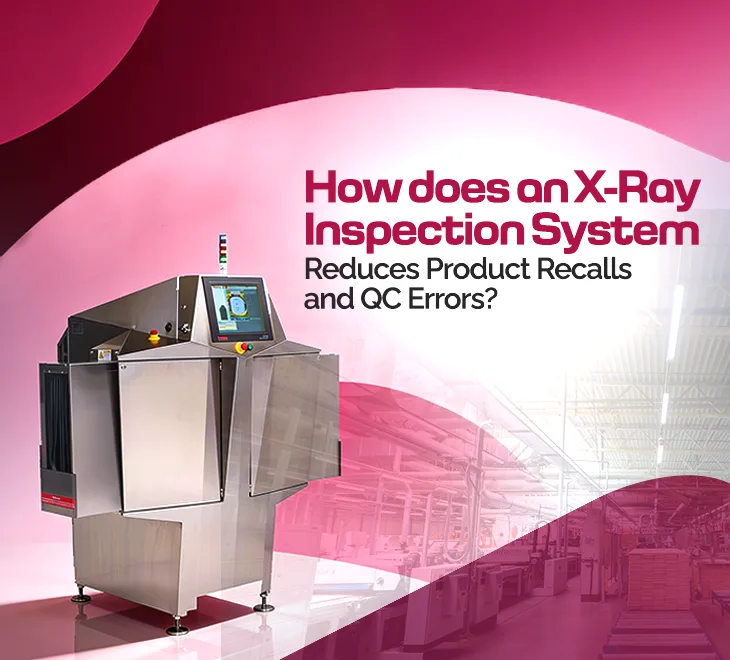
Almost all companies today manufacture everything in high volumes. This makes product quality not just about meeting the required standards. It's also about maintaining long-term business growth by focusing on customer safety, brand reputation, and social responsibility. Product recalls are often caused by defects in the products, occur during production. Recalls can hurt the company both financially and reputationally. To reduce or eliminate the chances of quality check errors, manufacturers can use the help of advanced technologies such as the X-ray inspection system. Systems like these will increase quality control in the manufacturing process.
Introduction to X-Ray Inspection System
In simple words, it does what a medical X-ray machine does, but for manufactured products. The system is used for quality control in a non-destructive way, as it can scan through the insides of a product without the need to open or damage it. It is very different from the usual visual inspection or metal detectors. The technology of X-rays is designed to detect several types of defects on different types of products.
Different industries have different requirements. The system is very useful for industries with safety standards that are very high. It can help the products to be in compliance with the strict regulations that they have to follow. This system can also work nonstop for long hours, inspecting products of all densities and speeds.
What All Can It Do?
Identification Of A Variety Of Defects
The basic function of the system is to inspect the products. It also offers the feature of versatility. It can detect contamination issues as well as issues with the product itself that usually go unnoticed.
Most commonly identified issues include:
- Contaminants such as glass, bone, stone, and dense plastic.
- Internal damages such as voids or cracks.
- Components that are missing inside an already sealed package.
- Packages that are filled too much or too little.
The manufacturers can take the defective items off before sending them out when issues such as these are identified early.
Reduction Of Quality Control Errors
Inconsistency often leads to quality control issues. Inspectors who are human will not be 100 per cent accurate. They may value the standards differently and miss defects that are small or inside the packets. They can also get fatigue from working under pressure. Unlike systems, they can't work long hours with different products at different speeds. Properly integrated X-ray technology in the operational process can remove all of these issues, as it inspects each and every single product with the same consistency.
- The same level of attention and inspection given to all products.
- Reduction in defects that are missed or false rejections.
- Less need for human interference and checks.
With the system in place, the department of quality checking can actually focus on the improvement and development of the products instead of constantly checking for defects.
Prevention Of Product Recalls With Early Defect Detection
To avoid recalls, one of the best steps to take is the early detection of defects with the help of an X-ray inspection system. This stops the defective product from going further and leaving the facility in the first place. The system allows real-time defect detection and rejects products with issues on the spot.
Early detection can:
- Stop the defective products from entering the packaging and distribution process.
- Eliminate the chances of large-scale product recalls.
- Reduce complaints from customers.
- Help follow the safety standards and reduce regulatory penalties.
This kind of move or approach can protect the consumers as well as the business from financial and reputational loss.
Be In Compliance With The Regulatory Standards
The food and medical/pharmaceutical industries have to adhere to very strict safety and quality regulations. Advanced technologies like these will heavily assist the manufacturers to be in line with the standards. These systems store data and traceable records. It can help to:
- Adhere to ISO, HACCP, and GMP standards.
- Improve the quality by holding the operational processes accountable.
- Maintain inspection data and records in case of audits.
Maintaining proper inspection and documentation processes will increase the reputational value of the company and increase the trust of the customers, regulators, etc.
Increase the Efficiency Of Operations
Modern technology is known for its efficiency. The system is not just about quality or compliance checking. Identifying defects early and rejecting them can improve production efficiency by reducing waste, downtime, etc.
Operations are optimized by:
- Lowering the cost of disposing of materials.
- Using the resources in a better way.
- Reducing the delays in the production process.
Focusing on all these parts of the manufacturing process can lead to higher levels of productivity and return on investment in the long run.
To More Smarter Manufacturing Systems
Manufacturing standards will keep on rising as the years go by. Integrating newer technologies like the X-ray inspection system in the manufacturing processes can be very beneficial for the business. This system is very accurate, as it can even detect hidden defects. Lowering quality errors and maintaining a consistent product quality can increase the reputation of the brand. For manufacturers that care about the customers too, systems like these are essential.
 Categories
 Our Brands